Tuesday, January 31, 2017

A Call to Humanity

Your silence will not protect you. If you didn't hear my sermon on Sunday, please listen here.

On Sunday, at my congregation, one member shared her experience attending the Washington DC Women's March. Two Rohingya women refugees spoke along with a member of our Refugee Resettlement team. And then I gave this sermon addressing the current national crisis of leadership drawing from the wisdom of Audre Lorde and calling us to live into James Luther Adams' vision of the prophetic liberal church. 

I think the sermon is better heard than read, but for those of you who prefer to read, the text is below.

May we cultivate a wide and expansive Community of Prophecy.

Love with Courage,
Alan


A Call to Humanity
a sermon by Rev. Alan Taylor
January 29, 2017
Unity Temple Unitarian Universalist Congregation 
(while meeting at United Lutheran Church)

A self-described “black lesbian mother warrior poet” shaped my development as a minister. I was in seminary when a fellow student shared with me the poetry and essays of Audre Lorde. In her writing I discovered a human being with radical self-determination that led her to face profound pain and despair and move powerfully from within and to speak up making her voice heard. 

Audre Lorde wrote prophetically: “Your silence will not protect you.” 

She wrote, “It is not our differences that divide us. It is our inability to recognize, accept, and celebrate those differences.” 

She wrote: “If I didn't define myself for myself, I would be crunched into other people's fantasies for me and eaten alive.” 

She wrote: “When I dare to be powerful, to use my strength in the service of my vision, then it becomes less and less important whether I am afraid.” 

And she asks, “What are the words you do not yet have? What are the tyrannies you swallow day by day and attempt to make your own, until you will sicken and die of them, still in silence? We have been socialized to respect fear more than our own need for language."

This month, here at Unity Temple, we have been exploring what it means to be a community of prophecy. As we’ve noted, prophecy doesn’t mean predicting the future as much as seeing what needs to be seen and naming what needs to be named, even though it can bring great pain to see and name what is really going on. 

The Jewish prophets of old read the signs of their times and spoke clearly about what they learned, but as they spoke truth to power they often risked their own lives. As they compared the realities of their time with sacred teachings about justice, many tried to flee or deny their assignments yet most responded to a loyalty to something larger than their individual lives, larger than the systems of injustice, larger than their fears.  

The role of the prophet today is also no easy task. For we have been socialized to respect fear more than our own need for courageous language. 

James Luther Adams “The prophetic liberal church is not a church in which the prophetic function is assigned merely to the few. The prophetic liberal church is the church where persons think and work together to interpret the signs of the times in light of their faith… The prophetic liberal church is the church in which all members share the responsibility to attempt to foresee the consequences of human behavior (both individual and institutional) with the intention of making history, in place of merely being pushed around by it. Only through the prophethood of all believers can we together foresee doom and mend our common ways.”

There have always been a number of people who agree to an ample amount of risk-taking in the name truth, justice, drawing the curtain back on transgressions of power, oppression, knowing that one’s perishing or jailing could be the ultimate end. We must grapple with to what degree will we be claimed by our fears or by our loyalty to greater than each of us. What are we willing to sacrifice for our own convictions? How shall we create a community that supports those drawn to the front lines?

A member here asked me, “How do you reconcile prophecy in a post-truth world?” When society turns entirely postmodern, truth becomes entirely relative and situated, and the claim to have legitimacy gets completely shattered. How do we pursue truth and justice, when these terms become irrelevant and meaningless to those with economic and political power?

The president of the United States of America spent his first week in office obsessed with convincing people that his inauguration was the most highly attended in history. His spokeswoman defended his sharing of what she called “Alternative facts.” Over the last several months facts have become shadowy politicized relative suggestions. Over the last week, President Trump claimed that he lost the popular vote because of people voting illegally and signed executive orders that will needlessly tear apart families, increase the suffering of refugees, profile and vastly discriminate against Muslims, ignore the signs of climate change, and prevent many women and poor Americans from getting adequate health care. 

During the election, I spoke out against the rhetoric of hate and fear that filled Donald Trump’s presidential campaign. When he was elected, I quietly hoped he would move to a more unifying stance. I told myself, “Don’t be premature in getting upset. Judge the man on his actions when he becomes president.” My friends, our faith tradition holds sacred seven principles--they are written each week on the back of your order of service. This morning I feel compelled to urge you to consider whether our very core values and convictions are under attack.

Have we reached a post-fact, post-enlightenment world? I’m here to tell you: No, we are not in a post-fact world but we are living in an era where the post-fact constituency is in power, and this has tremendous repercussions. With faith in the doctrine of Manifest Destiny and a dark view of both the rest of the world that justifies literally getting rid of people who are in the way of their understanding of progress, the current administration threatens the very democratic institutions on which this country was founded. The question at this moment is to what extent will the rest of the country let the current leaders achieve their vision. It is critical to remember: our silences will not protect us or anyone else.

Last weekend, I was at home with a sick child while my wife took the Green Line downtown to join the Chicago women’s protest. That evening, Angie and I looked for television news at 9pm but WGN was showing a basketball game. The only channel with news was FOX. So we turned on Fox news and there on the screen were members  of our congregation Karen Sullivan and Tina Lewis and their daughters speaking to why they traveled to Washington DC for the women’s march. But what was especially noteworthy was that during the clip of President Trump announcing his inauguration was better attended than Obama’s, Fox News put up photographs of the Washington mall, both taken at 11am of Obama’s first inaugural and Trump’s eight years later. The photos spoke a million words. 

Last night, several members of this congregation joined the protest rally at the international terminal at O’Hare. I was buoyed by images sent to me. One of our fifth graders that was at the airport last night is today wearing a t-shirt that says “We the People are greater than fear.” That is what America at its best is about. At a time so many Syrians seek asylum, It is ludicrous our government would completely turn its back. You can’t look honestly at Syria without thinking of climate change and the drought that brought on the civil war in that country. And now with millions of Syrians seeking refuge, human beings no different than you and me are facing famine, exploitation, and devastation. 

As our Unitarian Universalist principles are so blatantly violated, if we don’t take a strong stand then we’re not putting our values into action. We as Unitarian Universalists, at our best, resist retreating to a reactionary stance where we view the world as us vs them. But it is hard not doing so, especially when hoards of post-truthers respond to individuals who take issue with the president. We have entered a very scary time. 

During the campaign when Trump had only 5 million Twitter followers, 18 year old Lauren Batchelder addressed Trump at a campaign rally, saying, “I might be wrong, but it seems to me that you are no friend to women” and then after hearing Trump’s response, she took the microphone and said, “I want to get paid the same as a man, and I think you understand that, so if you become president, will a woman make the same as a man, and do I get to choose what to do with my body?” That night Trump tweeted his outrage that this 18 year old challenged him. And Lauren Batchelder received over 10,000 messages on her voicemail, her Facebook page, and other social media, calling her the most vulgar names, many of the messages threatening her safety. 

I can’t but wonder what rage will be poured on Judge Ann Donnelly who last night issued a temporary stay of President Trump’s executive order to prevent even green card carrying residents of this country from entering if they happen to be Muslim or from certain countries. This kind of bullying must be highlighted for what it is: mean, cowardly, truly uncivil, and unpatriotic. 

This new cultural reality and facade of an administration relies on a reality tv paradigm and the technology to funnel rage and loathing against those they disagree with. There’s probably never been a veracity crisis as great as we’re facing now. If there is ever a call for prophetic community, it is now.

Let me close with a passage from Audre Lorde, the black lesbian mother warrior poet whose words I find both a balm and a prophetic call for the prophethood of all believers:

I began to ask each time: "What's the worst that could happen to me if I tell this truth?" Unlike women in other countries, our breaking silence is unlikely to have us jailed, "disappeared" or run off the road at night. Our speaking out will irritate some people, get us called bitchy or hypersensitive and disrupt some dinner parties. And then our speaking out will permit other women to speak, until laws are changed and lives are saved and the world is altered forever.

Next time, ask: What's the worst that will happen? Then push yourself a little further than you dare. Once you start to speak, people will yell at you. They will interrupt you, put you down and suggest it's personal. And the world won't end.

And the speaking will get easier and easier. And you will find you have fallen in love with your own vision, which you may never have realized you had. And you will lose some friends and lovers, and realize you don't miss them. And new ones will find you and cherish you. And you will still flirt and paint your nails, dress up and party, because, as I think Emma Goldman said, "If I can't dance, I don't want to be part of your revolution." And at last you'll know with surpassing certainty that only one thing is more frightening than speaking your truth. And that is not speaking.

My friends, our silences will not save us. There is only one thing more frightening than speaking your truth. And that is not speaking. May we individually and collectively live into the call of being a community of prophecy.


Blessed be. Amen.

Thursday, January 19, 2017

A Call to Unity and Resilience


This past Sunday, I began my sermon describing this video of Karim Sulayman who engaged in a powerful trust experiment. I encourage you to watch it. Below is a part of the sermon.


As my colleague Rev. Galen Guengrich from New York City notes, “The entire video hinges on a single moment — the moment when someone went first. Someone responded to fear with a gesture of trust. Someone responded to loneliness with a sign of friendship. Someone responded to pain with an offer of comfort. Someone went first.”

My friends, in the coming weeks, months and years, there shall be all sorts of opportunities for each of us to respond to pain, suffering, oppression, and cruelty. Most people who step forward will be people of conviction, compassion, and community. Yes, community. The call for unity and resilience requires community. 

This month, we are exploring in my congregation at Unity Temple what it means to be a Community of Prophecy. Prophecy may sound like an odd theme. But in religious discourse, prophecy is all about naming truth that is uncomfortable to those who benefit from the way things are. Prophecy is about naming what corrupts and oppresses, what is cruel and inhumane.

Over 25 hundred years ago, the Jewish prophets of old spoke out against the cruelty, ignorance and inhumanity of their day, calling upon those in power to mend their ways and urging ordinary people to ban together in solidarity. For prophets stand in the gap between the way the world is and the world as it could be, if we human beings were to change our ways. Those who stay the course of sharing hard but real truths despite the consequences, these people are called prophets. 

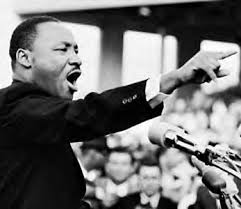
In the 20th century, Martin Luther King continued this tradition in a powerful way. When Dr. King spoke at the national gathering of Unitarian Universalists fifty years ago, he entitled his address “Don’t sleep through the revolution.” He called on the church to lead. "When the church is true to its nature, it stands as the moral guardian of society." He called on the church to be maladjusted to the structures of society that corrupt and oppress. And he finished with a ringing call to commit to building the beloved community. 

In his book Strength to Love, Dr. King says, “The hope of a secure and livable world lies with disciplined nonconformists who are dedicated to justice, peace, and brotherhood. The trailblazers in human, academic, scientific, and religious freedom have always been nonconformists. In any cause that concerns the progress of humankind, put your faith in the nonconformists.” The hope of a secure and livable world lies with disciplined nonconformists who are dedicated to justice, peace, and brotherhood. This is essentially a paraphrase of our third Unitarian Universalist principle which calls us to promote justice, equity and compassion in human relations. So it falls to us to hold a vision for the beloved community. That is our religious work. 

When I saw that video of Karim Sulayman standing, silent and unseeing, in New York City with that sign in his arms, four words especially jumped out at me: "I am very scared." 

My friends, so many people are so very scared, no matter their political affiliation. Truth be told, I am scared. It is important to admit and to share, for fear shared is fear lessened. Fear too often guides us but it need not if we participate in a community, a community of prophecy. Prophets at all times and places knew fear, but they navigated their fear in relationship with others. Prophets manage to step forward despite their fear.

Dr. King said very early in his ministry, “Men often hate each other because they fear each other; they fear each other because they don’t know each other; they don’t know each other because they can not communicate; they can not communicate because they are separated.”

The first task of a community of prophecy is to build trust, to build trust among its members and to build trust with people who are different. A part of this is to step forward  when we see the need. In this era when social media segregates people ever further along ideological lines, we must put down our screens and take the opportunity to talk one on one with others with different life experience.

The central role of a community of prophecy is to cultivate the strength to love, the kind of love that looks like resistance in the face of hate, the kind of love that calls for unity and for resilience. 

May we live ever into being a community of prophecy.

Blessed be. Amen.
Thursday, January 12, 2017

Take Courage


Take courage friends.
The way is often hard, 
the path is never clear,
and the stakes are very high.
Take courage.
For deep down, there is another truth:
you are not alone.
--Wayne Arnasan


As we approach Martin Luther King weekend, it seems appropriate that my congregation, Unity Temple Unitarian Universalist Congregation, is exploring what it means to be a Community of Prophecy. We are entering an era when we especially need to tend to the building of trust, the building of community, and the building of connections that both sustain us and call us to stand with those who share our values. 

I believe in the transformational power of love. The bedrock of my faith is that we as human beings have the capacity to change and grow, and it is love--love within us, love among us, and love beyond us--that calls us forward. I am a minister because I believe that congregational life is where we as human beings may cultivate this transforming love. It is agape love, love of the dignity of human beings that is key. When our lives are aligned with this kind of love, we hold the keys to our dignity and we are the authors of our actions. 

As we enter an era of uncertainty and anxiety, our faith and heritage are essential. We as Unitarian Universalists have long held a voice for tending the vulnerable, promoting the respect and dignity of every individual, and speaking up to resist inhumane policies. Rebecca Parker, the former president of the seminary I attended says, "Our times ask us to exercise our capacity for prophetic witness, by Prophetic Witness I mean our capacity to see what is happening, to say what is happening and to act in accordance with what we know…. Prophetic witness …is the ability to name those places where we resist knowing what needs to be known.” 

The tradition of religious prophecy goes back thousands of years to the Jewish Prophets: human beings who came out of a cultural milieu, recognized where injustice and inhumanity was rampant, spoke out vociferously for changing the ways society is run to be more equitable and humane, and lived in and among that cultural milieu.

Indeed, all the world religions have begun with a teacher or set of teachers recognizing the need for people to come around a life-giving principle or way of life. At the heart of each of these traditions is the call to compassion, the call to treat other human beings with dignity and respect, the call to tend the most vulnerable and challenge those with power and wealth whose way of life causes suffering. Those who hew to those teachings in times get called prophets. 

Whether in the days of old or in the 21st century, there are three essential qualities that make a prophet. First, a prophet comes out of a particular culture and grapples with its social norms. Second, social injustice and the resulting suffering and sorrow compels the prophet to distinguish the values that are life-giving and those that are life-denying ; and third, the prophet calls upon all who buy into and reinforce the dehumanizing cultural norms--the status quo--to change their ways so as to alleviate human sorrow and suffering. 

This month we celebrate the vision and call of Rev. Martin Luther King, Jr. and we also shall witness the inauguration of President Donald Trump whose rhetoric and cabinet nominations suggest he wants to dismantle many of our cherished institutions of democracy. If we are committed to the transformational power of love, we shall grow in our prophetic witness as we explore where love is calling us as individuals, as a congregation, as a wider society.  


This Sunday I will preach on "A Call for Unity, A Call for Resistance." If you are in the Chicago area, come join us. We are in temporary space during our building's restoration at United Lutheran Church, located at 429 Greenfield St (at Ridgeland) in Oak Park. 

On Monday, join me and members of 85+ congregations working on racial & economic justice, as we celebrate Martin Luther King Day at St. Mark United Methodist, 8441 S. St. Lawrence Ave., Chicago. We will gather at the 805 South Blvd. office in Oak Park at 7:30 a.m. for breakfast and prayer; buses and carpools depart at 8 a.m. sharp.  Bus fee is $10; pay as you are able.

May blessings multiply as we cultivate a Community of Prophecy in our congregations and beyond.

Warmly,
Rev. Alan Taylor

Here are some readings to reflect on:

Power at its best is love implementing the demands of justice. Justice at its best is love correcting everything that stands against love. 
--Martin Luther King, Jr.

The hope of a secure and livable world lies with disciplined nonconformists who are dedicated to justice, peace, and brotherhood.
—Martin Luther King, Jr.

Avoid the bad habit of domesticating the prophet of your choice, turning him into a cheerleader for your way of thinking and way of life. Remember that all the great prophets were courageous and outrageous folks who railed against the powers-that-be, challenged self-satisfied posit, threatened the prevailing social order, and would find you falling short in some significant ways. 
--Parker Palmer

Behind the lone prophet who speaks up, there is a group. …it is always a mistake to imagine that lone prophets are really alone. … We should think of Jesus this way as well. It is a mistake to see him as an isolated, heroic individual. It is better to see him as the crest of a wave, the sparkling foam breaking brightly from the force of a whole ocean moving and swelling up from underneath. I sense among Unitarian Universalists these days a deep desire to affirm the ocean that is within and beneath the voices of individual conscience that we celebrate. 
--Rev. Dr. Rebecca Ann Parker

Saturday, December 24, 2016

A Christmas Message with two readings

No one wanted the nativity set. In the old pool hall that our congregation bought last summer for our new community center and offices, there were hundreds of statues and doodads and holiday decorations, along with 32 pool tables. After a congregational sale, a public sale, and a second public sale, where over $30,000 of merchandise was sold at low, low prices, the rather large box that included eight figures of a nativity set still remained. 

So I took it home where it stayed in our garage until Thanksgiving weekend, when we set up our tree and decorated the house. My wife put the nativity figures on the floor in front of the tree and said this was what they did in Mexico. Not only did it seem a little odd set out on the hard wood floor, but there was no angel in the set. I commented that this must be a Unitarian nativity. 

A week later, I came home and discovered she and a Mexican friend had made a landscape that must be at least twelve square feet, different levels and moss covering it with the figures set out, and an angel, the very angel that one of the volunteers at the public sale had bought and given to my five year old daughter. Not only was the nativity scene beautiful, but it felt complete to me, for it is the angel that announces the good news throughout the land that love has been incarnated, God’s child has been born. 

My eight year old son explained to me that he helped put out a bunch of animal figurines from his toys to add to the scene and that he helped figure out where they all should go. Then Marco told me that someone really important was missing. I asked who? And he said, “Santa. There’s no Santa here in our new really cool Christmas decoration.” As he looked at me with a concerned look. I took a big breath and said, “Oh Marco, the nativity celebrates the birth of Jesus as the incarnation of God’s love in the world. And he was born over two thousand years ago. Santa is also an incarnation of love, and even though he’s old, he’s not that old.” We talked about the pageant story that he helps enact each year and explained that the nativity story is the most celebrated story of love coming into the world, particularly when the darkness is truly vast.  

The Christmas story is counter-cultural. It is about the incarnation of love, the kind of love that not only shares bread with the hungry, shelters the homeless, and clothes the indigent but also loosens the bonds of injustice, liberates the oppressed, and unshackles those in bondage. The King of Kings comes not in regal fashion but in the lowliest of places, for there was no room in the inn. That’s the kind of place where love is born, and that’s the kind of world that we’re in where in several places there is no room in the inn for a young woman about to give birth. 

My friends, this year darkness seems to stretch especially far and wide. There are places in the world torn apart by war, where ordinary people live in conditions so horrific that have been created by other human beings consumed with hatred and a lust of power. There are staggering numbers of refugees in our world, more than any time since World War II, wondering if there will be a safe place for them to sleep and raise their families. Is it not true that all these centuries after the nativity story, we human beings are lost and wandering still, stumbling at every step over our own greed or need, our ignorance or fear. Even in this country, there is great uncertainty and much of what we so dearly cherish seems threatened. 

After a year of far too much bloodshed both near and far, the birth of the vulnerable among us is a reminder that peace is precarious. One of my colleagues from the westside expressed appreciation for The Lutheran pastor, Dietrich Bonhoeffer who recognized that peace must be dared. The way of peace is not hewing to the safe, secure path but it is venturing forth without any guarantees, responding to what we know deep within is true despite the fear, that Christmas Peace comes when we turn and face the darkness, that Christmas Peace comes when we accept our vulnerability and look upon others through our own vulnerability, Christmas Peace comes when we are among those more humble folk that recognize what really matters rather than those who pursue power, wealth, and recognition.  

It is in the dark that love is reborn. For we gather this evening to celebrate a story that has kindled hope in the hearts of ordinary people century after century, enduring empire after empire, for the simple truth that love is incarnated in the world through the compassion and kindness and sensitivity of people like us, people who are vulnerable.

I didn’t tell Marco this, but I will sometime as he matures: the incarnation of God’s love needs help. The world doesn’t change just because people pray for peace and goodwill, the world changes as we are changed by those prayers to act with kindness and understanding for the sake of peace and goodwill. The incarnation of love that emerges in human hearts is spread by other human beings who are touched by kindness and joy and hope. 

Even Santa needs help. I had the opportunity to help Santa in a very tangible way. Santa wasn’t able to show up himself to the youth center of RefugeeOne and I was asked if I would fill in for him. The youth center meets at Unity Lutheran Church up on the far northside of Chicago. It was a bitterly cold late afternoon but the moment I stepped inside that building and heard a child’s laughter, my heart began to warm. 

Santa provided me a suit to wear and even hair, a beard, and a hat. I entered the room with a cheery ho, ho, ho. I asked the kids who thought it was cold and assured them it’s even colder from where Santa comes, but despite the cold, hope and love can come forward in any life. I invited each child to sit next to me. One by one, I asked them what made them smile or laugh in the past year and what then what they hoped for in the next year. And then I gave them a gift and wished them a Merry Christmas. 

The last of the young people to talk with Santa was a 16 year old from Malaysia. He approached me tentatively with an awkward smile. After he received his gift, the staff asked for everyone to gather for a photograph and then they asked me to stand with the 16 year old and his two younger siblings. Of course many other kids wanted to be in the photo. The staff told me that this young teenager's mother had a stroke that rendered her unable to care for her three children. The needs of his young siblings now fall on his shoulders. These staff members said it was the greatest joy to see this boy and his siblings smiling so big.

No matter how cold or how dark the world may become, what matters is that kindness and compassion are always possible. Though it is hidden to so many, the light of the world shines through the practice of love. We in American culture forget this at our peril. Peace comes when enough of us embody love. It is a paradox, the light of the world resides in the simple, the vulnerable, the humane, the kind, the compassionate. The light of the world spreads with acts of love, with human beings like us taking the way of peace. Whether in small acts or large, love is born each and every day and night. And tonight we celebrate the stories of how this love, the source of all love, incarnates into the world, stories upon stories that have been embellished.

Now you might say, well, all this talk is just fantasy. And I’d respond, “Have I not seen tears in your eyes?” Have you not been moved by the innocence of a child?” “Is it not true that life is saved by the singing of angels?“ “When have scales fallen away from your heart?”  Now, this Christmas Eve, is a time to make room in the inn of our hearts that love beckons. The birth of love is all about us. The miracle of life is calling us this night. May we prepare room in our hearts for this miracle. 

How shall we respond? 
Say “Thank you.” 
Say “I love you.” 
Forgive. 
Let go.
Sing. 

Rejoice.

-----------

Reading: “Christmas Eve” from Kathleen McTigue
All these centuries after the story of the star, the wise men, the baby born in the stable and the angels singing him in with their mysterious alleluias, we are lost and wandering still. We stumble at every step over our own greed or need, our ignorance or fear. Bethlehem is not a gentle city tonight. Its people are wise in the ways of the clenched fist, the broken truce. Marked like them with the scars of ignorance and sorrow we come to Christmas baffled as any shepherd by the music that sounds so high above us, the syntax foreign to our skeptical hearts. Yet we try to speak the language of hope, lifting ourselves toward the future with a dream of what yet may be. We remember that the heart of Christmas is hope: hope that a child, born homeless and in danger, may grow up to be wise and kind; that the stars, serene in their darkness have something to teach; that there are mysteries around us, among us, singing ethereal harmonies. New hope in ourselves rises then, too: that we will learn, one day, and in the nick of time, how to walk our paths with truth and justice, how to bring peace to life on this earth, how to sing for ourselves the angels’ songs of praise, wonder and joy.

Reading: Christmas Always Begins at Midnight by A Powell Davies
The darkness is vast truly, but across it there is a path of light - a path of moving light. 
It tells a story, a thousand stories gathered up now into the Christmas story. Of an empire that was disdainful and arrogant. Of the privileged and mighty who had sold their souls for the tinsel of a moment's pomp. Of priests and temples where God was a commodity and truth a joke grown stale. They did not see that the very ground beneath their feet was slipping; so much of it was moving, and so fast. It was like the turning of the earth unnoticed. They saw only what they looked for; things they could measure in the scales of power, and with the reckoning of gain and loss. 
But there was something that humbler people could have told them; both of the old that was dying, and of the new that was newly born. For something had sung it at midnight. Something had shone in the darkest hour. A dream had been told and the hearts of women and men were kindling. Gentleness and brotherhood were waiting for the morning, and already in the nighttime were up and on their way. 
And so the empire vanished as the empires of today will also disappear. The thrones of the mighty crumbled and their palaces went up in smoke. The temples fell in ruins and the weeds grew up, covering the sepulchres of apostate priests. While the song swelled into a heavenly chorus, and again and again the darkness shone; and the dream of Jesus won the hearts of women and men.

Wednesday, November 23, 2016

Where Do We Go From Here? A Response


Where do we go from here? We go outside our comfort zone. We go to new places. We go to our best nature. We go high. We go deep. We go to our core values. And, from there we can stand united to continue to form a more perfect union. 

Rob Breymaier shared a reflection that answers the question of my last post: "Where do we go from here?" Rob is the executive director of the Oak Park Regional Housing Center, a member of my faith community, and a dear friend. I am grateful for his perspective. 


At heart, I'm an optimist -- a believer in the project of America. I am not ignorant of the crimes and inhumanities that have accompanied our founding and history. But, I do believe that we are forming a more perfect union. I understand that it happens in fits and starts. That there is progress and regression. That we have a constant tension of momentum to be more egalitarian, just, and inclusive at odds with inertia to maintain a status quo of inequality, oppression, and closely held power. Overall, I agree with President Obama's sentiment that America today is truer to its ideals than ever before. We should take pride in that while questioning our history and the pace of our progress.

My greatest fear is for America itself. I promise this is not hyperbole. My fear is based in the fact that Donald Trump was willing to leverage the worst instincts of humanity to get elected. Trump stoked the flames of racism, misogyny, Islamophobia, xenophobia, and anti-semitism to gain votes for the presidency. He also threw in ridicule of persons with disabilities for good measure. And, he succeeded.

Because of his lifelong amorality and rudderlessness, no one felt comfortable saying for certain if this message was heartfelt or cynical. In fact, the campaign manipulated the media through that uncertainty.  While the message of bigotry was undeniable, surrogates portrayed it as cynical and therefore not as bad as if it were genuine. Meanwhile, the candidate himself would wink and nod to the white supremacists and other hatemongers he mobilized into political action. It was rare to hear objections that the message was antithetical to American values regardless. Even in cynicism this hateful strategy is destructive to our nation. The incredulity allowed Trump to play against pure evil and instead seem to be merely playing with the devil.

Never mind the ambiguity though. The transition period has clarified for us the true nature of the message. It was heartfelt. Trump is a hateful bigot and he intends to govern as a hateful bigot. There were clues we should not have avoided or rationalized. His choice of Mike Pence as vice president. His refusal to distance himself from white nationalists. His refusal to back down on a Muslim registry. His advertising that relied on sexist and anti-semitic imagery. That imagery of the campaign and the "calculated" choices he made are the framework for the ideology of the transition. There is no reason to suspect they won't be the foundation of his administration.

Trump has proposed a white supremacist for Attorney General. He named a white supremacist/anti-semite/misogynist as his chief strategist. He has made an Islamophobe/xenophobe his national security adviser. A segregationist (of both the race and class varieties) is on his short list of possible HUD secretaries. Given the available information, the logical conclusion is that Trump intends to serve as a white supremacist in the Presidency.

I am aware that this is a lot easier for me to say as a person who can check every box of privilege. I don't often need to swallow my pride. I am not faced with regular indignities. I haven't been forced to comply with systems and norms that are different than my own norms. Trump voters aren't likely to blame me for their problems or greet me with hatred.

Our immediate concern is to inform and interact with the Americans who voted for him so that they will not vote for him again. Our primary effort must be to expose him for the fraud he presents and the threat he poses. Because he is a threat to every American and to America itself.

The question remains, How do we engage with those who voted for Trump? I believe that many of them voted in the hopes that he would save their jobs and their towns. That he would save their way of life. That allowed them to accept a message that scapegoated, demonized, and targeted people of color, immigrants, Jews, Muslims, and women. Many of us are so disgusted by their ability to ignore his hatred that it makes it difficult to forgive them for their vote. But, our nation's future depends on our ability to confront Trump and his bigotry through the our fellow citizens. We must swallow our pride and begin conversation with them.

That doesn't mean we should allow people a pass on hatred. We must challenge bigotry when we confront it. We must condemn those who are truly hateful. But, we must also begin by reaching out to those nearest to us and learning about their concerns and fears. It will be through these intimate moments that we can begin to find bonds of common concern as well as common aspirations.

I am aware that this is a lot easier for me to say as a person who can check every box of privilege. I don't often need to swallow my pride. I am not faced with regular indignities. I haven't been forced to comply with systems and norms that are different than my own norms. Trump voters aren't likely to blame me for their problems or greet me with hatred.

Perhaps the burden I am referring to here falls primarily on people like me. People who can hopefully relate in some way to the Trump voter and begin a dialogue. I think as long as those like me check our privilege to be sure we are acting in service to social justice this could be a positive step.

I am willing to believe that some Trump voters did vote in hopes of economic change. That they felt it necessary to choose someone outside of the Washington political class.

I can imagine a perspective that sees the world moving too quickly and a feeling of being left behind. I grew up with people who I know are in situations where they don't know how they will take part in the America of the future. Who believe that the jobs they are qualified for are disappearing and that their future looks bleak. Yes, these people are almost exclusively white, almost exclusively middle class. These old friends have parents who worked for auto companies and other heavy manufacturers where they made good wages. Their parents were the last people to have jobs in a lot of those factories. My friends and I went to college or worked an apprenticeship. For some of us, it worked out. And, as it worked out most of us, especially the college educated, left for America's metropolises where opportunity is now concentrated. But, the jobs many of us prepared for aren't as plentiful anymore. Especially for those who stayed in place. The unions are diminished. Our degrees are less valuable as elite jobs require post-graduate work. People accept less for the same work. They don't seem to be able to save enough to get ahead. They wonder how they'll ever achieve their parents' standard of living. In the end, they find the phrase "Make America Great Again" to be a signal of hope.

Ironically, these people have a lot in common with the people I've gotten to know in the past 20 years. They feel targeted by "Make America Great Again." Yes, they are largely people of color and from other marginalized groups who have the exact same fears and concerns as my childhood friends. My friends from today see different causes and blame different forces. They see a continuous blockade to most of the opportunity in America that is getting worse. Few of them had parents making incomes as large as the elders of my childhood friends. But, they recall a time when their communities were more vibrant. They can remember local stores and safer streets. They miss the togetherness of their old blocks and neighborhoods. They wonder if that will ever be their reality again. Or, if they'll be kicked out as soon as their neighborhood becomes even modestly more livable.

It's nothing new that these two groups are being played against each other. This is a classic American tactic most notable in the antebellum and Jim Crow South. But, it is also a common tactic of the segregated cities in the Midwest and Northeast of the 20th century. An important part of our work is to inspire solidarity between these groups. It's something that should occur naturally. Yet, it continues to remain unfulfilled because of our social divisions, especially our racial division.

But now, we have crossed beyond a normal threshold. The election of Trump is not normal. This is not an ordinary time. At this moment in American history, we must find a way to succeed where generations before us failed.

Our task before us is critical. We cannot be passive in this crisis. We have to be willing to work hard and be uncomfortable. It's going to be hard to challenge our white friends and explain to them the threat Trump poses, first to our friends of color and eventually to all of us. It will be hard to explain to our friends of color that we aren't minimizing hatred when we try to understand the motivations of our white friends and connect them to the concerns we all share. We, who can navigate multiple settings, must move between and among them to find the connecting points that will bring us together.

Let's begin by asking one another about our hopes and fears. At first, let's listen more than we talk. Let's find ways to challenge others while allowing them to challenge us. Let's confront unfairness while allowing people to save face. Them, let's start to connect people. Let's demonstrate our commonalities. Let's explain our different realities. Let's build empathy and understanding. Let's breakdown stereotypes and uplift truth.

It's nothing new that these two groups are being played against each other. This is a classic American tactic most notable in the antebellum and Jim Crow South. But, it is also a common tactic of the segregated cities in the Midwest and Northeast of the 20th century. An important part of our work is to inspire solidarity between these groups. It's something that should occur naturally. Yet, it continues to remain unfulfilled because of our social divisions, especially our racial division.

But now, we have crossed beyond a normal threshold. The election of Trump is not normal. This is not an ordinary time. At this moment in American history, we must find a way to succeed where generations before us failed.

Our task before us is critical. We cannot be passive in this crisis. We have to be willing to work hard and be uncomfortable. It's going to be hard to challenge our white friends and explain to them the threat Trump poses, first to our friends of color and eventually to all of us. It will be hard to explain to our friends of color that we aren't minimizing hatred when we try to understand the motivations of our white friends and connect them to the concerns we all share. We, who can navigate multiple settings, must move between and among them to find the connecting points that will bring us together.

Let's begin by asking one another about our hopes and fears. At first, let's listen more than we talk. Let's find ways to challenge others while allowing them to challenge us. Let's confront unfairness while allowing people to save face. Them, let's start to connect people. Let's demonstrate our commonalities. Let's explain our different realities. Let's build empathy and understanding. Let's breakdown stereotypes and uplift truth.

We will each have to find methods to accomplish this work that work for our constellation of circles. But, we can learn from one another along the way. In other words, let's talk to each other as well. We can gain insight and strength from our unity. Most importantly, I hope it will allow us to hasten the change we want to create.

Where do we go from here? We go outside our comfort zone. We go to new places. We go to our best nature. We go high. We go deep. We go to our core values. And, from there we can stand united to continue to form a more perfect union.